


By David Warren
Good news! Due to a combination of demographic realities and public scandals, universities are advancing toward a phase of disappearance, in the United States and worldwide.
The cause of their extinction will be that they are no longer attractive to anyone, and too costly even to consider. Their former beneficiaries are abandoning them out of simple self-interest and, hopefully, will soon stop saturating our educational landscape.
It’s not that they are, of course, completely useless. Nothing is truly useless in God’s green world, and much can be recycled. But they are almost useless compared to the extraordinary “investments” poured into them from public sources (i.e., taxpayers) and private ones.
Indeed, not even a Harvard degree, for example, is entirely useless, since it is printed only on one side, so the reverse can serve as excellent paper for taking notes.
These are long-awaited events—though not by everyone—at least since the early 13th century, when Oxford and the University of Paris were officially incorporated.
Bologna (or “Baloney,” as we say in America) was founded more than a century earlier, but solely as the premier medieval law school. Its pretensions were, therefore, limited at first. To seek deeper wisdom, one became a monk.
Thus, “objectivity” was fostered, or rather, imposed by the Church. To delve more fully into the truth, one had to place the mind outside the worldly whirlwind. That is why the “higher” education of scholars took place outside the catastrophic disorder in which the world was always entangled. The schools were confined to cathedrals and monasteries, where seminarians could be guided, and not left loose to become a public danger. Heresy was not to be encouraged.
Although daggers and swords date back (according to archaeologists) several thousand years before the Middle Ages, cannons had not yet been invented (in China!), and the outside world was at least free from the noisiest type of anthropogenic explosions.
But secular universities set the world on the path to the atomic bomb. Learning was put at the service of power-hungry political psychopaths, and since then it has been increasingly devoted to their convenience.
It was discovered that young people, when partially and then completely freed from religious discipline, were really “boys” who tended to run wild on university campuses. Then, as now, they became psychological playthings of the worst kind of professors.
We have had eight centuries or more of student riots, as any superficial review of history confirms. But we have also had ample experience of morally corrupt professors.
These universities were, once again, secular institutions from the beginning, although some of the best fell under the influence of the Church and were sometimes indicated to follow religious and Christian decrees.
Or, to be perfectly frank, they were created by liberals—often within the Church itself—intent on experimenting with young minds, with the confidence that it would serve a liberal agenda.
The “reactionaries,” i.e., those without a liberal agenda, later pulled away, crippled by fear of hubris.
This agenda has not changed much since the 10th century. It will not change until the original cause of the decline is eliminated: the reckless expansion of “learning.”
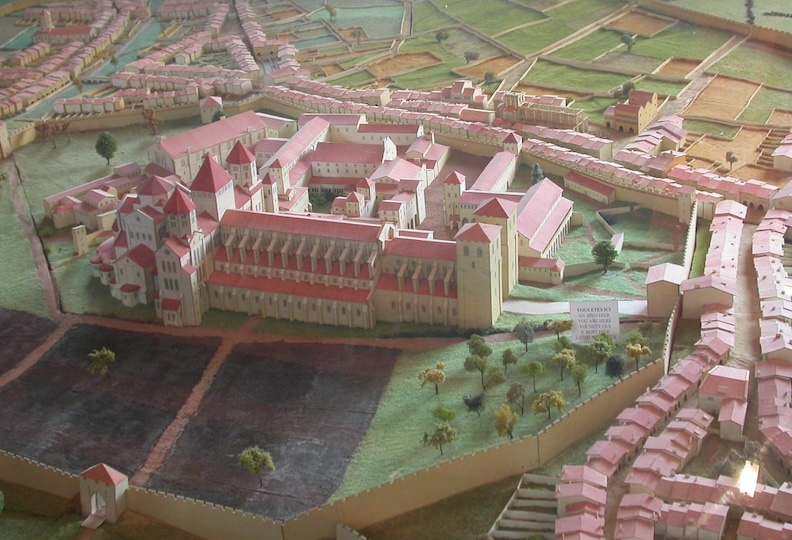
This was a deviation, in spirit, from the intentions of the ancient “Black Monks” of the Benedictine tradition, and even of the early Cluniac reformers, who desired nothing more than true reform, which—as the literate used to know—consists in a return to first principles.
In comparison, the sometimes dangerously proud, “cool,” black-robed men of the new monastic orders could be damnably “open-minded.”
They were the notorious first progenitors of these new universities, though they did not initiate them with demonic intentions; they were just a bit naive.
Albertus Magnus and Thomas Aquinas were fine, but they did not truly represent typical academic behavior.
And when the Jesuits arrived, the bad academic habits were already fully entrenched. Ignatius of Loyola’s most significant formation was undoubtedly a divine call, but it came to him in the heart of university life in Paris.
That is, it began in university life, not in the Church. This was an affliction for the Jesuits from the beginning, as they risked becoming an intellectual rather than mystical religious body.
And when THAT is twisted by the world, there is hell to pay.
In truth, the entire “Reformation,” including the Counter-Reformation, could be dismissed as an intellectual movement and counter-movement that threatened the Church’s mind from within.
Over the centuries, and up to today, the Jesuits have repeatedly gotten into trouble, perhaps not intentionally, but simply by acting as Jesuits and doing what they imagined necessary. “Intellectualism” makes them arrogant by disposition. They even get expelled, even from Paris.
Dominicans and Franciscans can likewise enjoy a new life, a Vita Nuova, when they too are freed from their bureaucracies and return to serving God, instead of the task of building powerful organizations.
To be fair, their universities, and even some of the non-Christian or “post-Christian” ones, retain features that, if possible, should be preserved, “folded back” again into the Christian way of being, and into the customs of the monastic schools that they “surpassed.”
They are the prodigal sons of Christendom. Let us prepare to welcome their members back again.
There is, of course, no other practical way forward—technically, backward—since monks must once again be surrounded by monks if they are to resume their Catholic (not Protestant) mission of praying for the world.
Even the Pope must be surrounded by religious if he does not want to be corrupted by worldly events. Likewise, the sciences that have a place in religious teaching must be reoriented toward divine understanding, instead of the impiety that now prevails.
About the author:
David Warren is former editor of the magazine Idler and a columnist in Canadian newspapers. He has extensive experience in the Middle East and Far East. His blog, Essays in Idleness, can be found at: davidwarrenonline.com.