


By Randall Smith
There are many reasons why people enter the Catholic Church, but one of the most common is their experience of beauty: the beauty of art, architecture, music, and liturgy. Too often, those who aim for “evangelization” ignore the beauty expressed and embodied in the Church’s artistic tradition. Why?
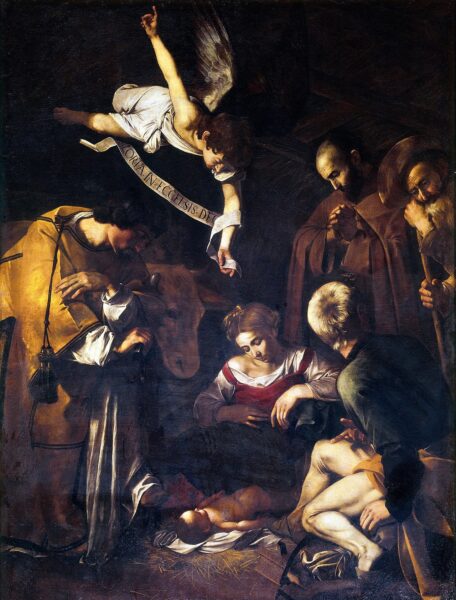
There are few instruments more effective for motivating people to take the Church seriously than hearing the angelic sound of Monteverdi’s Vespers of the Blessed Virgin or Josquin des Prez’s Missa Pange Lingua; admiring the magnificent paintings of Fra Angelico and Caravaggio; or contemplating the transcendent beauty of Chartres Cathedral and the Duomo of Florence. Experiencing any of these wonders would be a good first step, but there is much more: that initial step is barely like dipping one’s toes into an immense ocean that stretches beyond the horizon.
I teach theology. I believe in the importance of helping young people acquire a “understanding of the faith.” But I cannot achieve what great art and architecture can do to inspire the reverence due to the transcendent mysteries of our faith.
A colleague from a STEM field did not understand why the university required so many literature courses. He was a devout Catholic and attended Mass daily. He understood why we had theology courses, but not why there were so many mandatory literature courses.
I told him that I preferred our students to take more courses on Dante, Chaucer, and the poetry of John Donne, rather than just taking another course to meet theology requirements. “No, no, no,” he told me. “All they need is a writing and composition course.” He did not see the need for a formation of the Catholic imagination that would move the passions and fill our students’ hearts with the glories of the Christian artistic tradition.
Even many “conservative” Catholic institutions devote very little time to introducing their students to the artistic treasures of their tradition. The principle that seems to guide them is: “Let’s read a few more books.” Reading is fine. But in universities, both professors and students can get lost in their intellectual world. We need to “come back down to earth,” not in the sense of becoming less idealistic and more “pragmatic.” That rarely brings us back to earth in the right way.
A better path arises from a deeper understanding of the Incarnation. And there are few paths more effective for helping students understand the mystery of the Incarnation—what it means for the Word to become flesh, with its mysterious union of the eternal with the material—than introducing them to the beauty embodied in the best Christian art and architecture.
We wonder why young people leave the Church. Could it be because we have not connected them emotionally and spiritually with its beauty? Young couples return to beautiful churches when they want to get married. They travel the world to visit great works of art and beautiful churches.
When universities want to attract new students and cultivate a sense of belonging to the institution, they make sure to take them to the most beautiful traditional buildings on campus. Those are the buildings to which students will return with pride. They will show them to their friends and say things like: “I had several classes in that building,” knowing that their friends will consider them fortunate to have been able to enjoy such beauty.
What a privilege it must have been to receive an education on such a beautiful campus, with such beautiful buildings! This kind of beauty inspires love.
We teach so little to our young Catholics about the history of their Church. We do very little to present them with its great artistic treasures. We rarely let them sit and contemplate the beauty of a great Catholic painting, sculpture, or cathedral. When they can feel proud of their Church, it will be much harder for them to leave it. We must show them things that can make them proud and beauties that they can celebrate with joy.
It is time to stop building churches that embody a modernist aesthetic ideal. They are “ideological” buildings, not built to be beautiful. Beauty attracts people. Ugliness repels them.
Once people pass through the church doors, they need to hear the Word of God preached with solemnity and beauty. They need to participate in a Mass that is solemn and beautiful, something that clearly demonstrates that those involved take it very seriously, as if their lives depended on it. They need to hear good and orthodox theology, not childish ramblings.
But let us also be practical for a moment (since that seems to be what people say they want): you won’t get them through the door if the place isn’t beautiful. I am one of those academic theologians trapped in his mind, and I still understand it. Shouldn’t those who consider themselves much more “practical” and “pastoral” understand it too?
Rarely can anything better be done for the poor, the depressed, and the marginalized than offering them beauty. As Bishop Daniel Flores recently stated: “The poor deserve beautiful things, and those on the periphery of life deserve a place to celebrate the beauty of life.” The rest of their world may be falling apart, but being surrounded by true beauty is like fresh, clear water in a dry and dusty desert.
Most people will not know how to respond effectively to criticisms of the Church’s moral teaching. But when someone says something like: “the Catholic Church is stupid,” they will know that it cannot be as “stupid” as claimed, if they have learned to feel proud of the Church and its beauty. Then they can respond honestly: “Go to Notre Dame Cathedral in Paris; look at Michelangelo’s Pietà in St. Peter’s; or listen to Mozart’s Requiem, and tell me if the Church that inspired all that is stupid. Really? Show me something that secular modernity has produced that is deeper or more impressive.”
About the author:
Randall B. Smith is a professor of Theology at the University of St. Thomas in Houston, Texas. His most recent book is From Here to Eternity: Reflections on Death, Immortality, and the Resurrection of the Body.