


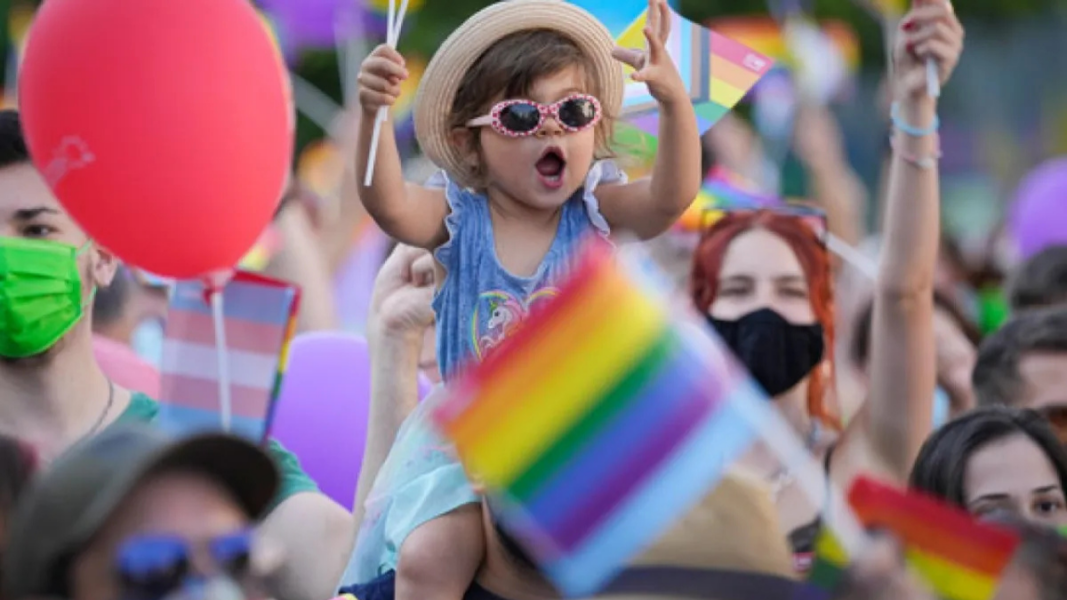
The European Union has launched a new questionnaire aimed at children and adolescents between 7 and 17 years old, inviting them to declare their “gender” and “sexual identity”. The initiative, disseminated through an official Brussels platform for “children’s participation”, introduces categories alien to biology and opens the door for minors to explore new forms of self-definition. Parents’ associations denounce that confusion is being sown from early ages and that gender ideology is being promoted as if it were a neutral fact.
An institutional process to shape minors’ worldview
The questionnaire, published on an official EU website, requests the minors’ names and surnames before offering four “gender” options: male, female, I prefer not to say, other. It also includes questions about mental health and identification with the “LGBTIQ+” group. The survey will remain open until December 8, and Brussels claims that the results “will serve to review European projects and national childhood plans”.
The initiative fits into the European Commission’s systematic strategy to promote the LGBT agenda at all levels, especially among children, presenting gender as a flexible construct and normalizing new models of coexistence alien to the family founded on marriage between man and woman.
Polish parents warn: “They are confusing our children on basic issues”
Magdalena Czarnik, from the Parents Protecting Children association (Poland), denounces in La Nuova Bussola Quotidiana that the questionnaire presents minors with the idea of choosing between “male and female” or even opting for “another gender”. For the activist, this constitutes “the first step toward the confusion of fundamental concepts, evident to reason and confirmed both by biology and by biblical creation”.
Czarnik also emphasizes that organizations funded by the EU, such as ILGA Europe—which receives nearly 70% of its budget from the Commission—are pushing a “top-down” agenda to promote LGBTIQ+ ideology among minors and progressively weaken the family institution. A process that, she warns, recalls other social engineering projects of the 20th century, with consequences of standardization, statism, and rupture of natural bonds.
Context: judicial pressure and exclusion of family associations
This survey comes shortly after the controversial ruling by the Court of Justice of the EU that seeks to force Member States to recognize “marriages” between people of the same sex celebrated in other countries.
At the same time, while the EU Charter of Fundamental Rights guarantees the protection of the family, the FAFCE—the main Catholic federation of family associations in Europe—has seen its access to European funds rejected. The Commission alleges supposed “gender disparities” and risk of limiting the dissemination of equality policies. Vincenzo Bassi, president of FAFCE, openly denounces an “ideological discrimination” against the approach favorable to the natural family.
A broad-reaching cultural offensive
For various associations and analysts, all these decisions confirm a strategy that seeks to redefine human identity from childhood and replace the natural vision of the family with ideological categories. Social resistance is growing in many countries, but Brussels insists on advancing policies that, under the language of “inclusion”, radically transform the concept of childhood, education, and family.