


Ayer, Saturday, we had a jubilee audience in the morning and a concert in the afternoon. Saint Nicholas was received in the sacred palaces with all honors, an act prepared by the Pontifical Swiss Guard that made even Parolin recover his smiles, forced, but a smile.
Two thousand poor people welcomed in the front rows of the Paul VI Hall to whom a dinner and a Christmas package were offered. But above all, the music was the «gift» that Pope Leo XIII and the organizers of the Concert with the Poor, with the special participation of Michael Bublé. «Tonight, as the melodies moved us, we felt the inestimable value of music: not a luxury for a few, but a divine gift accessible to all, rich and poor, scholars and simple folk.» It is a scene that had not been seen in Rome for many years. Francis had never wanted to participate in concerts, as he did not consider them his style. Benedict XVI loved them, but they were practically exclusively classical music. «Music is like a bridge that leads us to God. It is capable of transmitting feelings, emotions, even the deepest upheavals of the soul, elevating them upward, transforming them into an ideal ladder that connects the earth with heaven. Yes, music can elevate our souls! Not because it distracts us from our miseries, because it stuns us or makes us forget problems and difficult situations in life, but because it reminds us that we are not just that: we are much more than our problems and difficulties; we are beloved children of God!»
Pope Leo XIV in his speech in English to the thirteen new ambassadors accredited to the Holy See, who presented their letters of credence today in the Clementine Hall of the Vatican Apostolic Palace. They are the new ambassadors from Uzbekistan, Moldova, Bahrain, Sri Lanka, Pakistan, Liberia, Thailand, Lesotho, South Africa, Fiji, Micronesia, Latvia, and Finland. The Pope recalled that the diplomacy of the Holy See, «shaped by the values of the Gospel,» is constantly «oriented toward serving the good of humanity,» particularly «appealing to consciences and remaining attentive to the voices of the poor, in vulnerable situations or marginalized by society.» «Your diplomatic mission» and «the constructive relations between the Holy See and your various nations» can offer «concrete help» to address these «grave concerns» and contribute «to a renewed spirit of multilateral commitment» at a time when it is absolutely necessary, «revitalizing the international organizations established to resolve disputes between nations.»
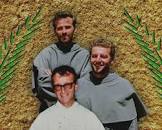
Pope Leo sends a special message to Peru, Poland, Italy on the tenth anniversary of the beatification of the priests murdered by Sendero Luminoso, known as the martyrs of Chimbote, our image of today. The priests Michał Tomaszek, Zbigniew Strzałkowski, and Alessandro Dordi were murdered in 1991 during their pastoral work in the Ancash region, victims of a context of violence associated with the terrorist group Sendero Luminoso. This papal letter extends to Poland, Italy, and other communities where the memory of the martyrs remains alive. They remained with their faithful, even in the midst of danger, and lost their lives under the accusation of «hatred of the faith.» The diversity of origins of the martyrs—two Polish Franciscan friars and an Italian diocesan priest—became a strength for their joint mission in Pariacoto and the Santa region.
Leone Melillo, journalist and Vatican correspondent, writes about the «Submerged Schism» and Pope Francis. When the Papal Magisterium Becomes Political Pedagogy. He expresses his deep esteem and admiration for Pope Francis , describing him as a shepherd close to the poor and needy, comparing him in some aspects to the figure of Pope Leo . He highlights his personal encounters and the impact of his pontificate, while noting the criticisms and difficulties that marked his trajectory, especially after his death.
The abolition of the Commission requested by Francis is part of a phase of adjustment in the new pontificate. Leo XIV, while not completely rejecting the approach of the late Pope Francis, is gradually defining his own administrative approach. The decision to dismantle the structure established by Bergoglio thus appears not only technical, but also symbolic, a redefinition of priorities, methods, and channels through which the Holy See intends to relate to benefactors.
The Holy See looks forward with great interest to the two Consistories of 2026. The first, which will take place on January 7 and 8, a few days after the conclusion of the Jubilee of Hope, will mark the return to collegiality. The second Consistory, not yet convened, will be for the first appointments of new cardinals by Pope Leo XIV. It will be necessary to create at least 18 cardinals to replace those who, between late December and during 2026, will turn 80 and lose their status as cardinal electors. The cardinals to be replaced are: Mario Zenari, apostolic nuncio in Syria; Christophe Pierre, Apostolic Nuncio in the United States; Fernando Filoni, Grand Master of the Equestrian Order of the Holy Sepulcher of Jerusalem; Juan José Omella, archbishop of Barcelona; Vincent Nichols, archbishop of Westminster; Michael Czerny, Prefect of the Dicastery for Promoting Integral Human Development; Timothy Radcliffe, Emeritus Master of the Order of Preachers; Joseph Coutts, emeritus archbishop of Karachi; Stanisław Ryłko, Emeritus Archbishop of the Basilica of Santa Maria Maggiore; Robert Sarah, Emeritus Prefect of the Congregation for Divine Worship; Carlos Osoro Sierra, Emeritus Archbishop of Madrid; Francesco Montenegro, emeritus archbishop of Agrigento; Antonio Cañizares Llovera, Emeritus Archbishop of Valencia; Vinko Puljić, emeritus archbishop of Sarajevo; John Njue, emeritus archbishop of Nairobi; Jean-Pierre Kutwa, emeritus archbishop of Abidjan, and Philippe Nakellentuba Ouédraogo from Burkina Faso.
The names of the new cardinals? Pope Francis has always privileged ad personam appointments and peripheral sees, elevating to the purple more humble pastors than the titular bishops of historic archdioceses, considered for centuries as cardinal factories. The line followed in the ten Consistories of Pope Francis’s pontificate, during which a total of 163 cardinals were created.
On the eve of the feast of the Immaculate Conception, the Pope proceeded to appoint new members of the Dicastery for the Causes of the Saints. Among others, it concerns Woelki, metropolitan archbishop of Cologne (Germany). Pope Leo seems to want to give other signs and the little synodal Cardinal Woelki has been appointed a member of the Dicastery for the Causes of the Saints of the Vatican. Woelki was previously a voting member of three Vatican dicasteries: that of the clergy, that of worship, and the promotion of unity. He is also a member of the Administration of the Patrimony of the Apostolic See (APSA). Also appointed Angelo De Donatis, major penitentiary; Roberto Repole, metropolitan archbishop of Turin; Ángel Fernández Artime, pro-prefect of the Dicastery for Institutes of Consecrated Life and Societies of Apostolic Life; Monsignors Fortunato Morrone, archbishop of Reggio Calabria-Bova; Alfonso Vincenzo Amarante, rector of the Pontifical Lateran University; and Sławomir Oder, bishop of Gliwice (Poland).
Just before the feast of the Immaculate Conception, a mosaic of Our Lady of Sorrows, Protectress of Slovakia, was inaugurated in the Vatican Gardens. Archbishop Bernard Bober of Košice, president of the Slovak Episcopal Conference, blessed the work during a ceremony attended by the Slovak president, Peter Pellegrini, whom Pope Leo XIV received in audience the day before. Participated two cardinals: the dean of the College of Cardinals, Cardinal Giovanni Re, and Cardinal Claudio Gugerotti, prefect of the Dicastery for the Eastern Churches. The Slovak president expressed his joy at seeing the image of the Slovak Virgin Mary in the Vatican, as «it is a source of hope, faith, and unity.» The Slovak Virgin Mary is «a symbol of the spiritual connection between Slovakia and the Vatican.»
The publicist Bernhard Meuser, promoter of the Youcat project and co-founder of the New Beginning initiative, which critically monitors the German Synodal Way, has warned the Vatican against confirming the statutes of the Synodal Conference, approved a few days ago and which aim to make the Synodal Way permanent. In an extensive publication on the initiative’s website, written as a letter to Bishop Karl-Heinz Wiesemann of Speyer, Meuser wrote: «Rome’s approval would be a betrayal of its own foundations in ecclesiology and sexual ethics. It would be the tolerance of lies.» «Cardinal Parolin, always concerned with saving the appearances of the German bishops, might be alarmed by the consequences that a definitive ‘no’ from the Holy See would have on the stability of the German Episcopal Conference, its relationship with the State, the relationship of the faithful with the Pope, and the instability of public opinion. The blame would fall directly on Rome. The bishops in question would be deeply humiliated.» «A ‘yes’ for reasons of state would be a lie. It would be adding salt to the wound by constituting the Vatican’s complicity in this great deception. The numerous believers who are already on the verge of leaving the Church will lose their trust forever.» The representatives of the Synodal Way hope «that their political calculations will bear fruit, that liberal options will finally arrive through the back door and discreetly, because Rome has finally softened and— not out of conviction, but rather out of annoyance and political convenience—will accede to the farce. However, after that, the Catholic Church in Germany would no longer be the Catholic Church.»
The universal religion centered on climate change is experiencing low hours. In Europe, the Green Deal plans are becoming much more pragmatic. The ban on the production of internal combustion engine cars and gas boilers is being lifted. Something is moving on the climate change front and Europe is also starting to backtrack. The focus is no longer on climate catastrophe, but on a long period of adaptation and mitigation. Let’s not fool ourselves, if Europe is changing its mind, it is because the United States has already awakened to a new era. Polls published in Newsweek , a left-wing American magazine, reveal growing discontent with climate issues, especially among the American left. The British magazine The Spectator points to a global trend in this direction and hundreds of companies are abandoning their climate goals.
In Europe they continue on their way, we’ll see how long it lasts and in a questionnaire for boys, girls, and adolescents, promoted on an official European Union website asks them to choose their gender from four options and indicate if they feel part of the «LGBTIQ+» group. Meanwhile, pro-family associations are denied European funding. The initiative is part of Brussels’ growing commitment to promoting LGBT ideology at all levels. The fact, serious in itself , is set in the context of the recent and incorrect ruling of the Court of Justice which wants to impose on each member state the recognition of «marriages» homosexual contracted in other EU countries. The «Europeanist» war against the family (man-woman-children) and against human identity, starting from childhood, is total.
Absolved on appeal for «crimes against Pope Francis.» The judges annulled the first-instance sentence that condemned the former councilor and deputy mayor of Civitanova to one year in prison, a suspended sentence. The case dates back to 2018, when some comments appeared on Fausto Troiani’s Facebook profile about national and international politics in a heated tone, insulting political figures like Moscovici, Macron, and Merkel. Pope Francis was also the object of persecution: «Not to mention Francis and his team of pedophiles.» He was accused of outraging the honor and prestige of the Pontiff, a figure equivalent in Italian legislation to that of the President of the Republic.
For several weeks, more than sixty migrants have been sleeping in the Church of Saint-Polycarp in Lyon. Every winter, places of worship are illegally occupied in this way, with the support of radical activists, the Church usually limits itself to observing the situation. Almost every winter, one or more French churches are illegally occupied by migrants. Just last year, places of worship in Toulouse and Marseille were affected. The situation is always the same: only the affected building changes. One morning or afternoon, groups of young people arrive, with mattresses and bags in hand; when spring arrives, the occupants are evicted—sometimes by force, sometimes after negotiations—and return to sleeping in the open air.
Joachim Heimerl continues with his articles on the Mass. The “new Mass” differs from the traditional Mass not only in the external rites, but above all in the texts of the Missal, an example of this is the “Offertory.” In the «New Mass», this has simply become a «preparation of the gifts.» The prayers with which the priest offers the Eucharistic gifts have given way to meaningless table prayers, which consider the bread and wine simply as “fruit of the earth and human labor” to be brought “before the face of God.” They are no longer associated with the sacrifice on the cross, but only with an unspecified “salvation,” which can be anything or nothing, and certainly sounds more “Christian” than it really is. There is no trace of the invocation of the Trinity, and even the name of Christ is mentioned only once, incidentally, during the mixing of water and wine; but even in this brief prayer, the Trinitarian formula has been omitted and the central idea of redemption through Christ’s sacrifice has been set aside. Cardinal Ottaviani stated it in his “critical study” (1969) on the new Mass, emphasizing that only the traditional Mass is the “complete monument” of the Catholic faith; the new Mass, on the other hand, can be understood as a distorted image of it.
On December 4, 1963, Paul VI promulgated the Sacrosanctum Concilium , the first Constitution of the Second Vatican Council, approved almost unanimously (2147 votes in favor and 4 against). Sixty-two years later, that text remains the basis of the Catholic liturgical reform, but also an ongoing project. The Sacrosanctum Concilium was not born as a technical document. Its preface immediately clarifies its purpose: “to foster everyday Christian life,” “to foster the union of all believers,” “to strengthen what serves to call all to the bosom of the Church.” The liturgy is presented as the beating heart of ecclesial life , “the sacred action par excellence,” in which Christ is truly present “in the person of the minister,” “in the Eucharistic species,” “in the Word,” “in the assembly.”